 RU
RU EN
EN ME
ME TR
TRHow to Move to Europe as a Programmer: A Guide to the Digital Nomad Visa in Montenegro (2026)
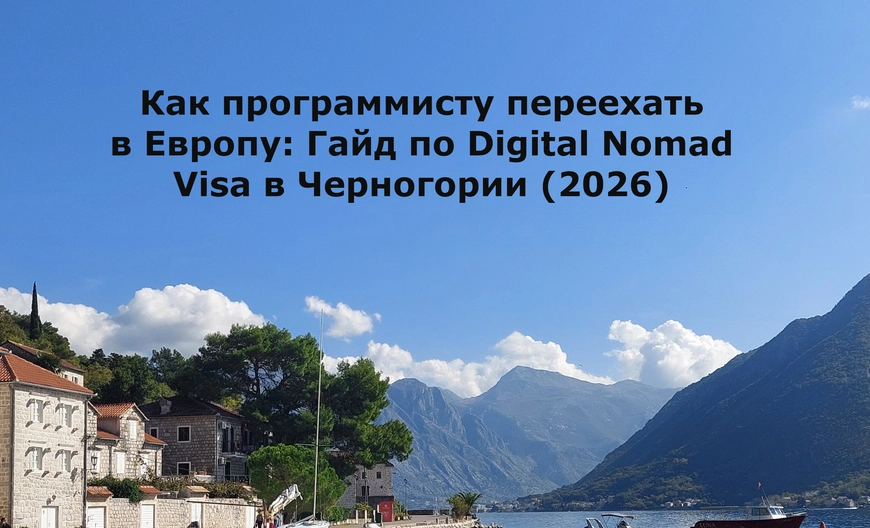
Montenegro is becoming one of the most attractive hubs for digital nomads in Europe. The combination of a mild climate, affordable cost of living, and the official Digital Nomad Visa (DNV) program makes this country an ideal relocation destination for IT professionals. In this article, we'll explore why programmers should choose this destination and how to successfully legalize their relocation.
GoMonte in Montenegro helps you obtain a digital nomad residence permit in Montenegro and supports you every step of the way. Get a consultation now: +382 67 322 888 Viber/WhatsApp/Telegram
1. Why the Digital Nomad Visa is a good way to relocate for a programmer
For a developer, a digital nomad visa in Montenegro is a "golden mean" between a tourist stay and the complex process of obtaining a residence permit through company formation.
- Long-term legalization: The visa is issued for up to two years, with the possibility of an additional two-year extension.
- Tax incentives: One of the main advantages of the program is the exemption from income tax in Montenegro on income earned from abroad.
- Low entry barrier: Income requirements (approximately €1,350 per month) are significantly lower than similar programs in Spain or Croatia.
- Quality of life: Programmers gain access to European levels of safety, environmental protection, and the opportunity to travel the Adriatic in their free time.
2. Features of the country for IT specialists
Montenegro is actively developing its IT community, and DNV is primarily focused on those working in the technology sector.
- No local market tie-in: You continue to work for a foreign client (USA, Europe, CIS) without competing with local talent.
- Contract flexibility: The program is suitable for both full-time employees of foreign IT companies (working remotely) and freelancers working through a foreign sole proprietorship or under direct contracts.
- Developed infrastructure: Cities such as Budva, Tivat, and Podgorica are rapidly opening coworking spaces with high-speed internet, which is critical for stable deployment and video conferencing.
3. Comparison of relocation conditions for IT specialists: Spain, Portugal, and Serbia
While Portugal was previously the undisputed leader, in 2026, a sharp increase in the minimum income threshold and a real estate crisis made the Lisbon hills less accessible. Spain, for its part, has complicated bureaucratic procedures, requiring a substantial package of documents with double apostilles. Neighboring Serbia remains popular, but the lack of a sea and protracted European integration processes are forcing many to choose Montenegro's "boravak." Montenegro wins this competition thanks to its "golden mean": clear income requirements, fast issuance of residence permits, and EU candidate country status.
4. Legal restrictions for obtaining a Montenegro Digital Nomad Visa
Nomad status in Montenegro grants the right to legal residence, access to government services, and education for children. However, there is a key legal restriction that is important to know before applying for a digital nomad residence permit in 2026:
- Restriction on the Local Labor Market: You are not allowed to work for Montenegrin employers or provide services to companies registered in Montenegro. Your income must be sourced exclusively from abroad.
- No Right to Permanent Residence: Time spent in the country on a nomad visa does not currently count toward the five-year requirement for permanent residency (Stalni Boravak).
- Freedom of Movement: You can freely enter and exit the country, but to maintain your status, it is recommended to spend more than 183 days per year in Montenegro (to confirm tax residency).
5. Taxes in Montenegro for IT specialists
- Personal Income Tax: 0%. As part of the talent attraction program, income earned by digital nomads from foreign activities is completely exempt from local income tax.
- No social contributions: Since you are not employed in Montenegro, you are not required to pay contributions to the local pension fund or health insurance fund (if you have private insurance).
- Comparison: While nomads in Spain pay a "Beckham Law" tax of 24% and face a progressive tax rate in Portugal, Montenegro allows you to legally retain 100% of your gross income.
6. Requirements for obtaining a Digital Nomad in Montenegro in 2026
- Income level: approximately €2,500–€2,700 per month (net).
- Bank statement for the last six months confirming regular income from foreign clients or employers.
- The account balance must cover the entire period of the residence permit (24 months), if monthly income is unstable.
7. Requirements for Digital Nomad Residence Permit Applicants
Montenegrin law in 2026 is lenient regarding business types, as long as they are located outside the Balkans. You can qualify for the status if you:
- Employee: Work remotely for a foreign company. You will need an employment contract and an official letter from your employer confirming that your presence in the office is not required.
- Sole proprietor (SP/Freelancer): Have long-term contracts with clients. It is important that these contracts are valid for at least one year in advance.
- Business owner: If you own a company abroad that generates dividends.
One of the most popular myths is that a nomad visa is only available to holders of a computer science degree. Let's look at the reality of 2026:
- Do you need to prove your programming degree? No, a relevant higher education is not a requirement for obtaining a Digital Nomad Visa.
- Who can apply? Designers, marketers, analysts, copywriters, project managers, and representatives of any other professions that allow remote work.
- What do they actually check? They don't check your university credentials, but the reality of your work. Instead of a diploma, officers look at your contracts, portfolio, and transaction history.
For more information on the documents required for applying for a residence permit, visit our website: gomonte.me/services
8. How a programmer can prepare a portfolio and evidence of remote work
The main task when applying for DNV is to prove to the authorities that your income is stable and generated remotely. For a programmer, this means collecting the following package of "digital evidence":
- Current contract: An agreement with an employer or client that explicitly states the right to remote work.
- Bank statements: A statement of cash flow for the last six months, confirming regular salary payments.
- Proof of qualifications: A relevant education diploma or certificates confirming your status as a Senior/Middle developer.
- Business registration certificate (for freelancers): If you work through your own sole proprietorship or company abroad, you will need a registration certificate and tax returns.
9. Cases of successful relocation of programmers and obtaining a residence permit with GoMonte support
Real-world experience helps avoid common mistakes. Let's consider two typical scenarios:
Case 1: Backend developer from a large outsourcing company
- Situation: In-house employment at a European company, salary over $3,000.
- Process: Received a letter from HR confirming eligibility to work from Montenegro. Submitted documents in Budva.
- Result: Received a residence permit (Boravak) card in 4 weeks.
Case 2: Frontend freelancer with multiple clients
- Situation: Works through Upwork and contracts directly with US clients.
- Process: Collected statements from the platform's personal account and contracts with key clients. Proved average income for six months.
- Result: Successfully obtained a 2-year visa. Notes that being officially registered as an individual entrepreneur in his home country greatly simplified income verification.
10. Best cities for relocation to Montenegro for remote workers
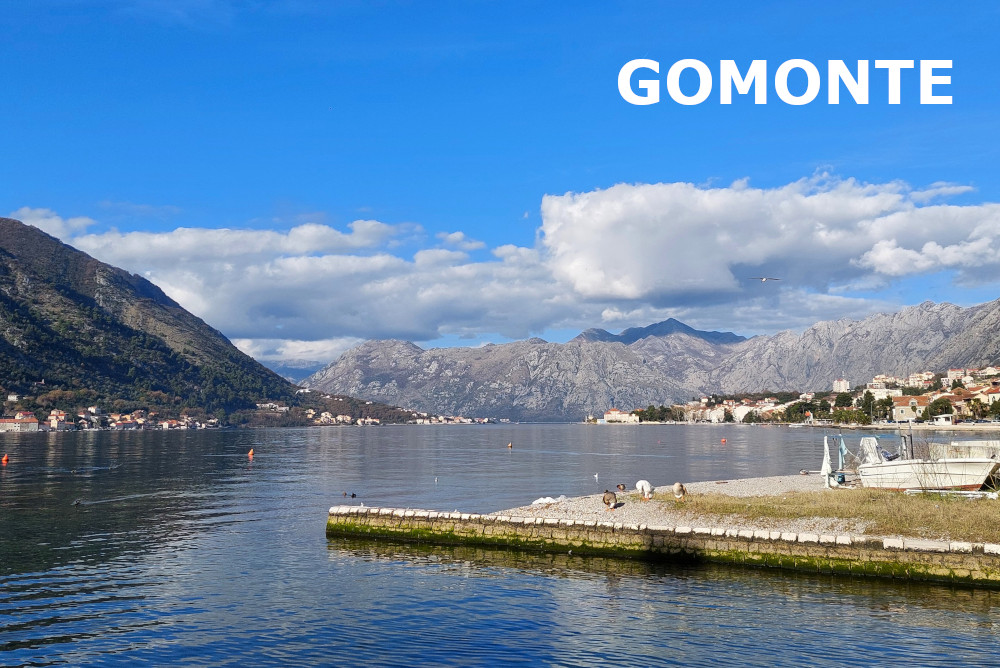
Montenegro offers a unique variety of locations: from downtown to quiet bays with postcard-perfect views. The choice of city directly depends on what's most important to you—networking, aesthetics, or developed infrastructure:
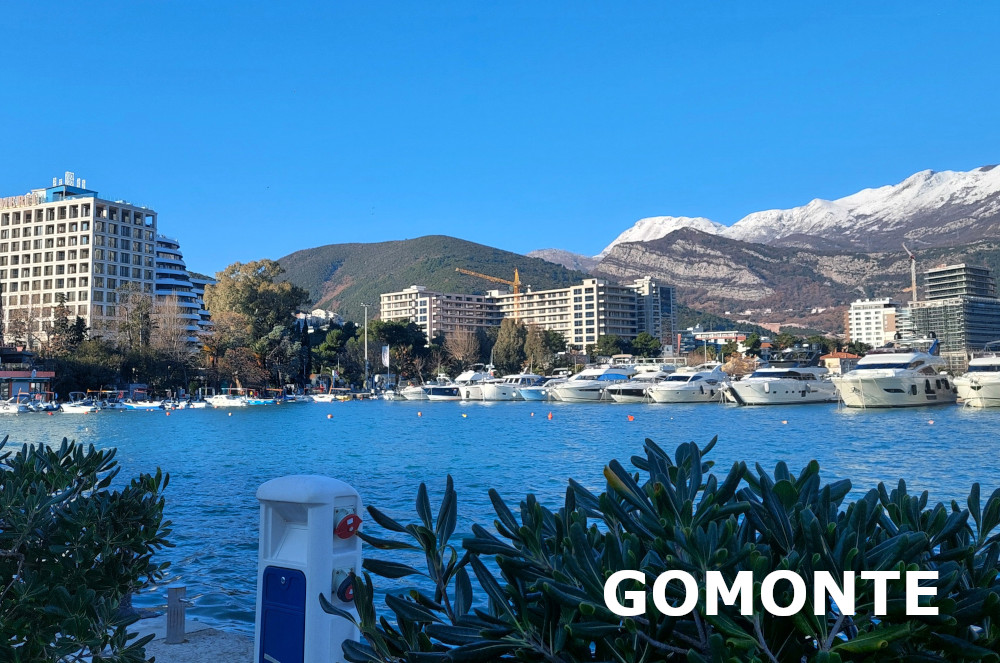
- Choose Budva if you're looking for excitement and socializing.
- Stay in Podgorica if you value budget and urban comfort.
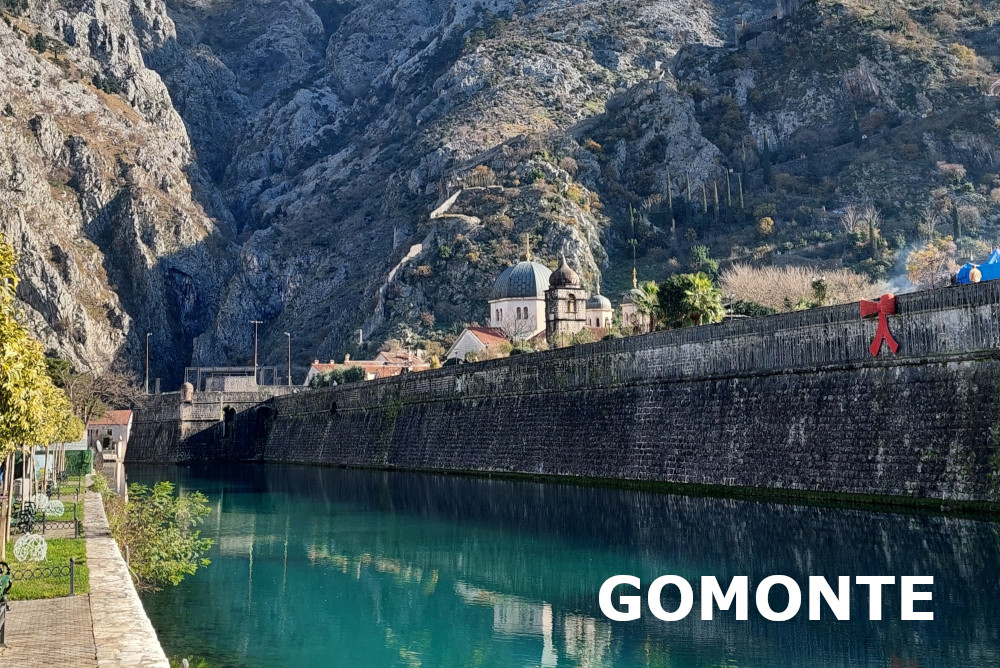
- Book accommodation in Tivat or Kotor if aesthetics and a premium standard of living are your goal.
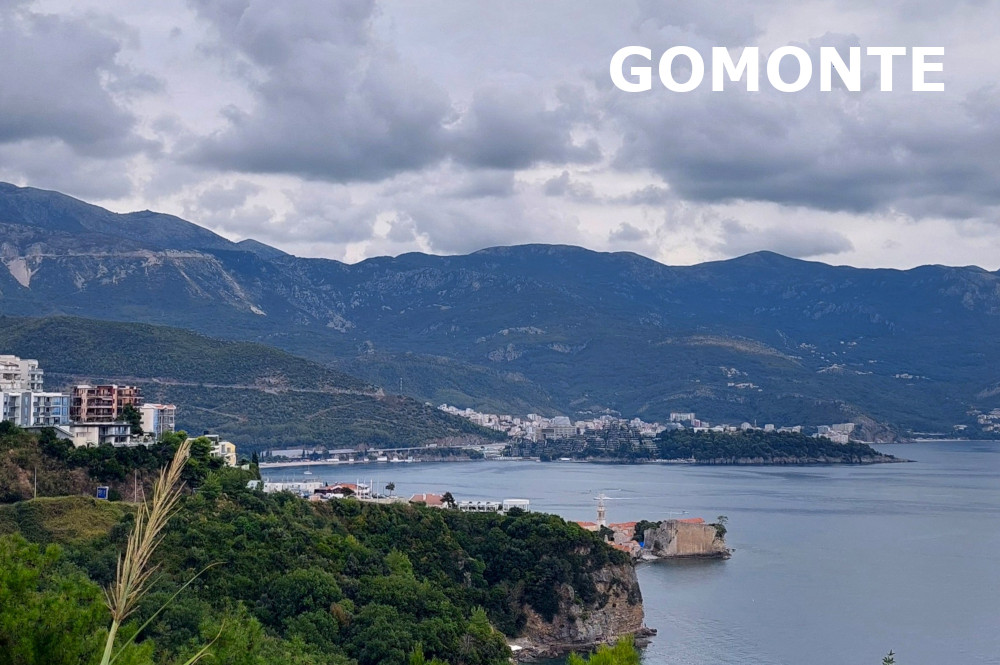
Budva is the "capital" of the Russian and international scene. If you don't like being alone and want to be in the thick of things, this is the place for you.
- Atmosphere: Constant movement, coworking spaces, Russian-speaking communities, and endless cafes along the coast.
- Pros for work: It's easy to find like-minded people, project partners, and new friends here. A huge selection of rentals (from apartments with sea views to modern condominiums).
- Cons: In the summer, the city becomes very noisy and crowded with tourists.
Podgorica, the country's capital, is ideal for those who separate work and relaxation by the sea. It's the only city where life doesn't come to a standstill in winter.
- Atmosphere: Busy atmosphere, modern shopping centers, top gyms, and medical clinics.
- Pros for work: Reliable internet, the lowest prices on long-term rentals, and proximity to the airport. Government agencies (MUP) are located here, simplifying the paperwork process.
- Feature: The nearest beach is a 45-minute drive away, but you'll live in a full-fledged metropolis.
View long-term rentals in Montenegro on our website: gomonte.me
11. Internet Quality in Montenegro
11.1. Fiber Optic (Optika)
- Where to look: Almost all new residential complexes in Podgorica, Budva, Tivat, and Bar. If you're renting a property in older buildings or private accommodations in the mountains, you should check for fiber optic availability at your address.
- Speed: Standard packages offer speeds from 100 Mbps to 1 Gbps.
- Stability: This is the most reliable option for Zoom calls and large file transfers. Ping (latency) is minimal.
- Note: Installation in a private home can take time, as physical cable installation is required.
11.2. 5G in Montenegro
Montenegro was one of the first countries in the region to launch full-fledged 5G. Coverage covers almost all major cities and tourist centers.
- Where 5G is available in Montenegro: Podgorica (almost everywhere), Budva, Tivat, Kotor, Cetinje, and Nikšić. The 5G signal is very strong along the coast.
- Speed: With a clear line of sight to the tower, speeds can reach 300–600 Mbps, comparable to wired internet.
- Advantages: Mobility. You can work from a café terrace or directly from the beach, using your phone as a hotspot.
- Disadvantages: Speeds may drop during peak hours (especially in Budva in summer) or inside buildings with thick stone walls.
Fiber optic connections (Optika) provide the most stable internet in Montenegro, as wired connections are not affected by weather conditions, such as strong "bura" winds, and are not subject to speed drops during peak tourist season, unlike 4G and 5G mobile networks.
Tips for remote workers:
- Always check "Optika": When viewing a property, access the router settings or ask the owner to show you their contract with the provider.
- Backup: Have a SIM card from a local provider (for example, an M:tel tourist package with 500GB or 1TB) as a backup. 5G is a great help if the power goes out temporarily (which happens in winter during storms).
- Location: Podgorica and Tivat (Porto Montenegro) have the most modern infrastructure. In Kotor, the signal can be unstable due to the landscape and old buildings.
Conclusion
The Digital Nomad Visa in Montenegro is a transparent and cost-effective path for a programmer. If you're a developer looking for a place with stunning nature, favorable taxation, and clear rules of the game, the Adriatic coast awaits you. Start gathering your documents and get ready to code with a view of the mountains and sea!
Read about a programmer's real-life experience relocating to the country and their living expenses on our blog: https://gomonte.me/blog/post/36/
If you've decided to move to Montenegro in 2026 but still have questions, contact our specialists: +382 67 322 888 Viber/WhatsApp/Telegram
We guarantee an easy move and a stress-free residence permit.
For a list of required documents and the cost of assistance without waiting in line, see our section on residence permits: gomonte.me/services