 RU
RU EN
EN ME
ME TR
TRThe best country to move to Europe in 2026: How to get a residence permit in Montenegro without investment or language skills
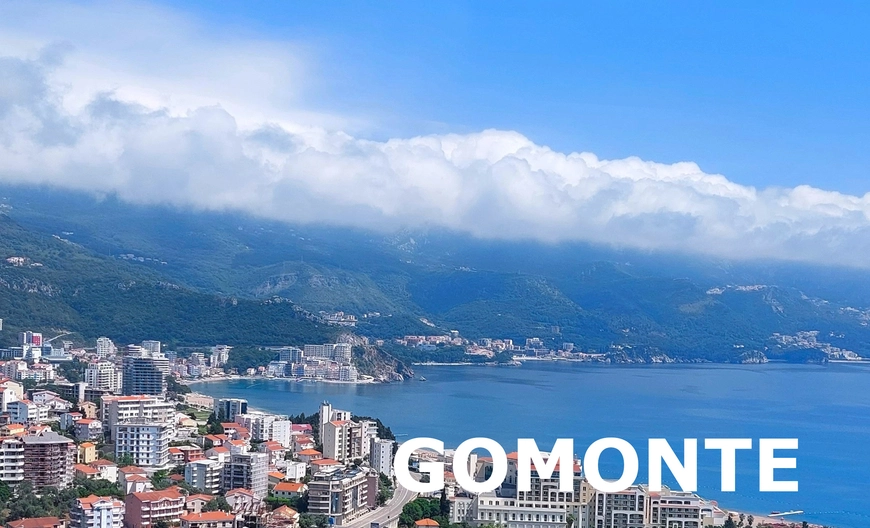
Choosing a destination for emigration from Russia is becoming an increasingly complex equation every year. Amid tightening immigration policies in the EU, the cancellation of popular Golden Visa programs, and a sharp rise in housing prices in Portugal and Spain, the focus of investors and expats is shifting to the Balkan Peninsula. In this article, we explore why experts agree that Montenegro has earned the title of the best country for relocation in 2026.
Real estate analysts and international migration experts agree: Montenegro is the best country for moving to Europe in 2026. It has earned its status as a "safe haven" thanks to a unique combination of factors: while the rest of the continent is erecting bureaucratic barriers, this country remains welcoming to foreign capital and new residents. Predictions of Montenegro's imminent accession to the European Union make relocation here not just a change of residence, but a strategic investment. Interest in the region is expected to peak in 2026, as this is the last opportunity to obtain European status under simplified conditions before the rules are synchronized with Brussels' strict standards.
Get help from an immigration lawyer on relocation, business relocation, and residence permits: +382 67 322 888 Viber/WhatsApp/Telegram.
What you'll learn from this article:
In this review, we'll take a detailed look at why Montenegro has become a favorite destination for citizens of the Russian Federation and other CIS countries. We'll discuss:
- How to legalize and obtain a residence permit without investing thousands of dollars or requiring language skills at the outset.
- Why the absence of a visa barrier and a similar mentality make adaptation stress-free.
- The financial aspect: from affordable rent and the possibility of purchasing housing in installments to low utility bills.
- Social guarantees: safety, free school education, and an environmental situation considered one of the best in the world.
This article will serve as your step-by-step guide to moving to the most promising country in the Adriatic. At the end, you'll find a checklist for moving to Montenegro from an immigration lawyer at our company, GoMonte.
1. Advantages of Moving to Montenegro
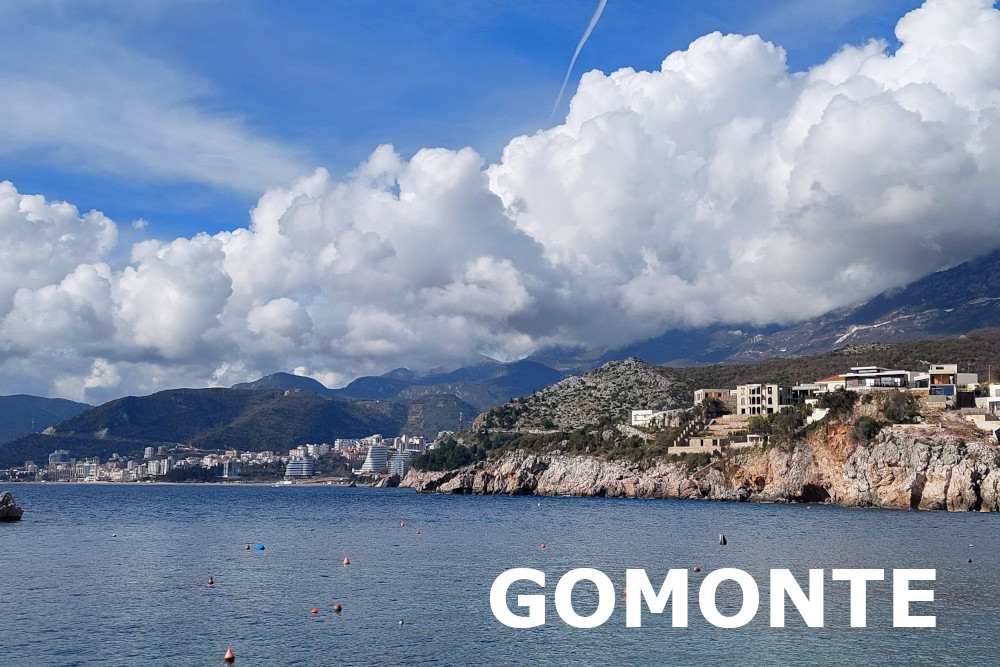
For many Russians, the question of "where is the easiest to move to" in 2026 boils down to visa formalities. Montenegro remains a unique exception in Europe, offering the lowest entry barrier for relocation. The most important advantages of moving are: visa-free travel, similar language skills, and the ability to quickly obtain a residence permit in 30 days.
1.1. Visa-Free Travel
While most Schengen Area countries have effectively closed their borders to Russian tourists or have made visa issuance extremely difficult, the Balkan countries maintain a visa-friendly regime.
- Russian citizens can stay in the country visa-free for up to 30 days (during the summer season, this period is often extended to 90 days).
- To enter, only a passport valid for at least 90 days is required.
1.2. No language barrier
One of the main fears when moving is social isolation. In Montenegro, this risk is minimized. The Montenegrin language is Slavic, and its similarity to Russian is striking, making it easy to adapt within three months.
In practice, this looks like this:
- Everyday life: You'll begin to understand the context of a conversation in a store or pharmacy within a week.
- Similar vocabulary: Many words are intuitive (for example, "хваля" - thank you, "право" - straight, "сладолед" - ice cream), although there are also some amusing "false friends of the translator."
- Russian-speaking community: Huge expat communities have formed in Budva, Bar, and Tivat. Russian kindergartens, schools, coworking spaces, and food delivery services operate here.
- The experience of thousands of relocators confirms: after three months of active life in the country, the language barrier disappears, and within six months, you'll be able to freely resolve administrative issues without an interpreter.
1.3. Do I need to learn Montenegrin to obtain a residence permit?
According to the current Foreigners' Act (Zakon o strancima):
To obtain an initial residence permit (boravak) for most purposes (starting a business, purchasing real estate, or family reunification), you do not need to take a language proficiency test. You do not need to provide certificates from language schools or undergo interviews with the Ministry of Internal Affairs (MUP).
However, it is worth considering two nuances:
- Permanent Residence Permit (Stalni boravak): If you decide to obtain permanent resident status after five years of living in the country, you will need to pass a basic language proficiency test (level A2).
- Employment: If you are applying for a local company, knowledge of the language will be an advantage, although in the IT sector, English is often sufficient.
Therefore, knowledge of the Montenegrin language is not required to legalize residence in 2026, making it easier and more comfortable to get started in the country than in Germany or the Baltic states.
2. Comparing the Cost of Living in Montenegro and EU Countries
Budget is often a deciding factor when choosing a country to relocate to. Despite general inflation in Europe, Montenegro continues to maintain its status as the "golden mean": here, you can achieve a European quality of life while spending 30-50% less than in neighboring Italy, Croatia, or Austria.
2.1. Property Rentals
The rental market in Montenegro is diverse, but extremely attractive for those working remotely. Unlike Paris or Berlin, where searching for an apartment can take months due to strict credit checks, in Montenegro the process takes 2-3 days.
- Coastal cities (Budva, Tivat, Kotor): Quality one-bedroom apartments range from €600 to €900 per month. By comparison, similar accommodation in Spanish cities with a comparable climate will cost €1,200+.
- Bar and the surrounding area: Here you can find excellent options for €450–€600, and the city is considered one of the most comfortable for permanent residence (it has all the necessary infrastructure and wide promenades).
- The capital and the north (Podgorica, Niksic): In Podgorica, prices are 20% lower than on the coast, and the level of comfort is higher thanks to modern residential complexes.
View rental properties in Montenegro on our website: gomonte.me
2.2. Electricity and Water Costs
In Europe, utility bills have become a "horror story" in recent years. In Montenegro, the situation is more stable, although there are some peculiarities.
- Electricity: This is the main expense, as central heating is almost nonexistent in the country. In winter, the air conditioning and heating bill for a 50 m² apartment will be €80–€120. In summer, it will be around €40–€60.
- Water and garbage collection: On average, around €15–€25 per month.
- Internet: A fiber-optic connection (up to 500 Mbps) costs around €25–€35.
In total, utility bills for an average apartment rarely exceed €100–€150 per month. In Germany or Scandinavia, heating alone can cost three times as much.
2.3. Grocery Basket and Services
Montenegro is an agricultural country, so here you can still experience the taste of "real" food, not the plastic vegetables from supermarkets.
- Markets (Pijaca): Fresh homemade cheese, prosciutto, olives, and seasonal vegetables are cheaper here than in chain stores, and the quality is on par with farmer's stalls in Italy.
- Average grocery bill: A full weekly grocery basket for a family of two costs €70–€90.
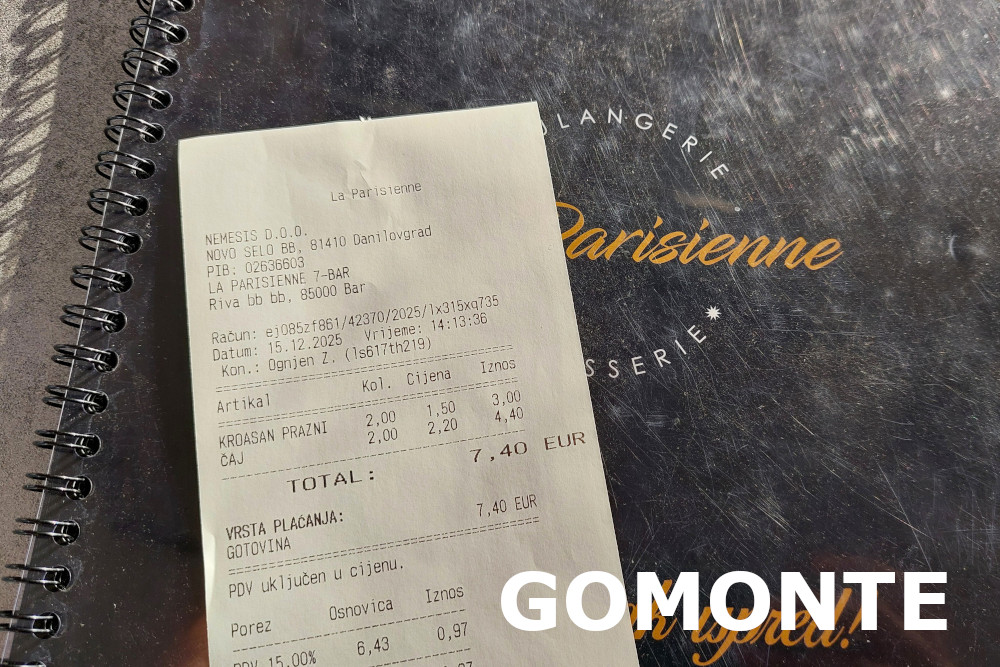
- Cafes and restaurants: A meal for two at a traditional local restaurant with wine will cost €25–€35 per person. A coffee and croissant will cost an average of €4.
- Services (haircuts, car repairs, cleaning) are also significantly cheaper due to lower labor costs than in the EU. This allows for a high standard of living even on an average income. Women's haircuts cost €10–€20.
- Fuel, parking, and road costs: Toll roads in Montenegro are the new roads heading north, starting from €2.50. Paid parking on the coast starts from €1 per hour, and in the capital from €0.40 per hour. Average fuel price at the end of December 2025: €1.30 per liter.
3. Housing with Installments: Investing in Future Residency
Buying real estate in Montenegro is not only a way to preserve capital but also the most direct route to official European residency. While EU countries (Greece, Portugal, Spain) are sharply raising entry barriers for investors or even ending Golden Visa programs, Montenegro remains one of the most lenient jurisdictions.
3.1. How to buy an apartment in Montenegro without a mortgage: Interest-free installment plans from developers
One of the main obstacles for foreigners in Europe is the difficulty of obtaining a mortgage. In Montenegro, banks are reluctant to lend to non-residents, but the market has adapted: direct installment plans from developers are thriving.
- Payment terms: The standard plan requires a down payment of 30-50%. The remainder is spread over the construction period (usually 12 to 24 months).
- No overpayments: Unlike a bank loan, developer installments are interest-free in 90% of cases. You only pay a fixed price per square meter.
- Flexible schedules: Many companies are willing to negotiate customized terms, such as quarterly payments or an increase in the final installment upon completion of the project.
Investing at the foundation stage not only allows you to spread the financial burden but also earn money: by the time construction is completed, a liquid property in Budva or Tivat appreciates in value by 15% to 30%.
Browse Montenegro's resale and installment properties in our catalog: gomonte.me/apartments
We also have great deals on urgent sales starting from €75,000: gomonte.me/apartments
3.2. Eligibility for a Montenegrin Residence Permit in 2026
Montenegro offers unique conditions for obtaining a residence permit (privremeni boravak), which have virtually disappeared in the rest of Europe.
Main programs:
- Residence permit based on real estate ownership (This rule does not apply to land ownership without buildings or commercial real estate).
- Residence permit based on employment
- Residence permit based on opening a company
- Digital nomad residence permit for 2 years
For more information on the cost and required documents, please visit our section: gomonte.me/services/residence-permit
By purchasing a residential property, you not only invest in a real asset that can be rented out at a yield of 5-7% per annum, but also secure legal status for yourself and your loved ones in a European country.
4. Social Climate and Safety
Montenegro is one of the few European countries where the concept of "safety" is tangible. The pace of life here is dictated by the philosophy of "polako" (slow and calm), which directly impacts the overall atmosphere in society and the attitude toward newcomers.
4.1. Low Incident Rate
Low crime rates are not just a line in police reports, but an everyday reality. In small coastal towns and mountain villages, it is still customary to leave home doors unlocked, and a bicycle or scooter left outside is likely to wait for its owner until morning.
- Child Safety: There is a true cult of family and children here. Locals view the safety of the younger generation as a shared responsibility. Parents feel free to let their children play on playgrounds or walk to school alone.
- Lack of Aggression: Street conflicts are extremely rare here. Social control in small communities works better than any CCTV: everyone knows everyone else, minimizing the risk of crime.
4.2. Attitudes toward immigrants from the Russian Federation: mentality, religion, and cultural affinity
For Russian citizens, adapting to Montenegro is significantly easier than in Western European or Asian countries. This is due to several fundamental factors:
- Linguistic affinity: The Montenegrin language belongs to the Slavic group. Basic understanding is achieved within a month of living, and speaking at a basic level is possible within six months.
- Religious affinity: The majority of the population is Orthodox. Shared holidays (Easter, Christmas) and similar spiritual values create a strong bridge between the nations.
- Historical ties: Friendly ties have been maintained between our countries for centuries. Montenegrins regard Russians as "their own," valuing their cultural contributions and shared history.
There is no prejudice against immigrants. The local mentality is hospitable and open, as long as you respect local traditions and laws.
4.3. Clean Environment: The Impact of a Mild Climate and the Sea on Health
The environment is the main asset of this small country on the Balkan Peninsula, officially declared an "ecological state" by the Constitution; there is no heavy industry polluting the air or water.
- The combination of sea ions and pine phytoncides (especially in places like the Bay of Kotor or the pine forests of Ulcinj) makes the air a natural inhaler for people with respiratory conditions.
- The Adriatic Sea is renowned for its transparency (visibility up to 40 meters). The local diet is dominated by organic products: freshly caught fish, extra virgin olive oil, cheeses, and vegetables grown without pesticides.
- Mild winters with 270 days of sunshine, an abundance of vitamin D, and the absence of extreme cold have a positive effect on the nervous system, relieving seasonal depression and chronic stress.
5. Education in Montenegro and Children's Futures
Moving to another country with children always raises a host of questions about school and socialization. Montenegro's education system is extremely accommodating to foreigners, and its status as an EU candidate country opens up exciting opportunities for graduates.
5.1. Public and Private Schools: How to Enroll a Child Without Language Proficiency
Local legislation guarantees the right to education for all children, regardless of citizenship. If you have a temporary residence permit (boravak), your child can attend for free.
Public Schools (Osnovna škola):
- Barrier-Free Admission: A translated transcript from a previous school and a birth certificate are often sufficient for enrollment. Knowledge of the language is not a prerequisite; children are enrolled "in advance."
- Language Adaptation: Children aged 10-12 years usually begin to understand teachers within 3-4 months, thanks to immersion and the Slavic affinity of their languages. Schools often offer additional free Montenegrin language lessons for foreigners.
- Atmosphere: Teachers are very patient and understanding with new students, helping them integrate smoothly into the community.
Private and International Schools:
For those who prefer instruction in English or Russian, there are international schools (such as Arcadia Academy or Knightsbridge Schools International) in the coastal cities (Budva, Tivat, Kotor) and Podgorica. They offer the IB (International Baccalaureate) program or the British A-Level system, allowing children to continue their education anywhere in the world without losing a year.
5.2. Diploma Prospects: Education in an EU Candidate Country
- Recognition of Diplomas: Diplomas from local universities (the University of Montenegro and private universities such as Donja Gorica) are recognized throughout Europe.
- Path to European Universities: Graduates of Montenegrin schools have the right to enroll in universities in Austria, Slovenia, Italy, and Germany under preferential conditions, similar to those offered to applicants from EU candidate countries.
- European Standards: Each year, curricula are increasingly aligned with European quality standards. This applies to both classroom technology and teaching methods.
Education in Montenegro means stress-free admission, quick adaptation to a friendly language environment, and a "ticket" to the European academic space in the near future.

6. Legal Guide: How to Obtain a Residence Permit in Montenegro in 2026
Obtaining a temporary residence permit (boravak in the local language) is the first and mandatory step to legal residence in the country.
6.1. Step-by-Step Algorithm: From "boravak" to Permanent Residence
The path to Montenegrin residency consists of several stages:
- Entry and Registration (White Card): Within 24 hours of crossing the border, you must register at a tourist information point and pay a tourist pool (approximately €1 per day).
- Submitting documents for a temporary residence permit (Boravak): You submit your documents to the local police station (MUP). Your fingerprints will be taken, and you will receive a confirmation of submission. From this point on, your stay is legal until a decision is made.
- Obtaining an ID Card: Typically, a plastic card valid for one year is issued within 2-4 weeks. It must be renewed annually.
- Path to permanent residence (Stalni boravak): After 5 years of residence with a temporary residence permit (without changing the basis and subject to the time limits for absence from the country), you have the right to apply for permanent residence.
- Citizenship: In 2026, Montenegro will continue to harmonize its laws with the EU, making permanent residence status virtually identical in rights to citizenship, with the exception of voting rights.
6.2. List of required documents for a Montenegrin temporary residence permit
For most grounds (work, family reunification, property ownership), the basic package of documents is as follows:
- Passport: Must be valid for at least 6 months after the expiration of the future temporary residence permit.
- Criminal Record Certificate: Issued within 6 months; requires translation into Montenegrin by a certified translator.
- Proof of residence: Lease agreement or title deed (List nepokretnosti).
- Medical insurance: Obtained through a local insurance company (valid for 30 days upon submission).
- Bank account statement: A minimum balance of €3,650 (at a rate of €10 per day) in a Montenegrin bank account. A bank statement is not required for a work-based residence permit.
- Receipts for payment of state fees: Payable at any bank or post office.
6.3. Business Immigration: Company Registration
Opening a legal entity (D.O.O.) remains the most popular method of legalization for freelancers and entrepreneurs.
Advantages of starting a business in Montenegro:
- The authorized capital can be as little as €1.
- The company director receives a residence permit through employment, and the spouse and children receive one through family reunification.
- No turnover requirements
- You can conduct business worldwide.
7. Economic Potential and Integration into the European Union
In 2026, the country is on the home stretch before joining the European Union. For investors and expats, this is a "golden window" of opportunity, when the country is already effectively living by European standards but retaining Balkan prices.
7.1. What will change after joining the EU: forecast for real estate prices and living conditions
Official accession to the European Union (expected in the coming years) will radically transform the country's market:
- Explosive growth in real estate prices: Historical experience in Croatia and Slovenia shows that in the first 2-3 years after joining the EU, the price per square meter increases by 30-50%. Demand from Central European citizens seeking affordable housing on the Adriatic will create a shortage of liquid properties.
- Tightening of residence permit rules: Border control and migration policy will be brought into full compliance with the Schengen Code.
- Infrastructure boost: Subsidies from EU Structural and Investment Funds will be used to modernize roads (extending the Bar-Boljare highway), build new wastewater treatment plants, and develop green energy.
- Unified quality standards: Food retail, healthcare, and the service sector will finally transition to European certification, which will improve quality of life and gradually align consumer prices with EU standards.
7.2. Why it's beneficial to move "before" the official expansion of the EU borders
Moving to Montenegro as an early bird offers several strategic advantages:
- Locked-in income: Purchasing an apartment now allows you not only to rent it out profitably (yielding 5-8% per annum in euros), but also to achieve significant capitalization of the asset by the time the country joins the bloc. Unrestricted access to the European market: For entrepreneurs, registering a company today is an opportunity to pave the way for duty-free trade and operations within the EU single market tomorrow.
- Low tax burden: Currently, tax rates in Montenegro (9-15% on personal and legal income) are significantly lower than the EU average.
8. Checklist for moving to Montenegro
The main advantage of moving to Montenegro today is transparency. The rules are clear: owning real estate or registering a company opens a direct path to a residence permit. You gain security, a mild climate, organic food, and a community of like-minded people without having to endure the years-long bureaucratic hell typical of Central Europe.
To ensure your move goes smoothly, we've prepared a list of key steps:
- Document verification: Collect current police clearance certificates and original educational documents.
- Financial plan: Prepare bank statements. Include rent (2-3 months in advance) and a deposit.
- Document legalization: Check whether your country requires an apostille (for citizens of the Russian Federation and some CIS countries, an apostille for Montenegro is generally not required).
- Accommodation search: Book short-term accommodation to find a permanent option "on site."
- Choosing the basis: Decide whether you want a residence permit based on real estate, employment with your company, or as a digital nomad.
- Health insurance: Obtain a local policy, which is required for submitting documents to the Ministry of the Interior.
- Document translation: Consult a licensed court translator (sudski tumač) once you're in Montenegro.
- Notarization: Complete a lease or purchase agreement with a notary.
- Boravak application: Submit biometric data to the Ministry of the Interior and receive confirmation (potvrda).
- Account opening: Choose a bank to service your business or personal needs.
Ready to start a new life by the sea? Don't put off your decision until prices are in line with European standards and regulations become stricter. Start your journey to a European future today.
Take the first step towards relocation:
Schedule a personal consultation with an immigration lawyer on temporary/permanent residence/relocation matters: +382 67 322 888 Viber/WhatsApp/Telegram.
Get a selection of liquid properties (from cozy studios to villas with Adriatic views): gomonte.me
Learn more about documents and turnkey legalization costs: gomonte.me/services/residence-permit
Your comfortable relocation is the responsibility of our GoMonte team of professionals in Montenegro.