 RU
RU EN
EN ME
ME TR
TRLegalization of real estate in Montenegro. How to legalize a building
If you own real estate in Montenegro, you must understand that the complete legal clarity of your property is not just a formality but the foundation of its security and liquidity. If your property was built without proper permission or with deviations from the design (considered "informal"), its legalization becomes a priority.
Only by legalizing the construction in accordance with current legislation (specifically, the Spatial Planning and Construction Law) can you avoid hefty fines, eliminate the potential threat of demolition, and, most importantly, gain the right to freely sell, gift, or bequeath the property while maintaining its full market value.
In this article, we will discuss the new 2025 law that applies to all owners of illegal buildings. If you need advice on legalizing real estate in Montenegro, please contact our lawyers: +382 69 777 680 Viber/WhatsApp/Telegram
GoMonte provides the following real estate legalization services:
- Initial legal audit and consultation
- Document collection and preparation
- Financial support and fee calculation
- Organization of technical assessments
- Full legal support
1. New Real Estate Legalization Law in Montenegro 2025
Purpose of the Law: The main purpose of the Law on Spatial Planning and Construction of Objects (as amended in 2025) is to establish order in urban planning, ensure citizen safety, and integrate all existing objects into a unified cadastral and tax database. In essence, the state seeks to curb chaotic construction and give owners the chance to fully legally protect their assets.
What is an informal (illegal) object in Montenegro? An informal (illegal) structure is any building (house, villa, outbuilding) that was erected, in whole or in part, without an official building permit (građevinska dozvola) or with significant deviations from the approved design. This includes both older houses built decades ago and new extensions not registered in the Cadastre.
Read more about the new law on the Government of Montenegro website: www.sluzbenilist.me
2. Why is it important to legalize illegal construction?
Since 2025 (taking into account the previously tightened legislation), real estate legalization in Montenegro has become not just a right, but an urgent necessity, as the status of an illegal construction entails serious financial and legal risks:
- Prohibition on transactions
- Fines and increased fees
- Threat of demolition
3. Who is affected by the legalization of illegal construction in Montenegro?
3.1. Owners of properties with legal violations
This group includes all owners whose properties have discrepancies with the official cadastral data:
- Unauthorizedly erected buildings: This applies to owners of residential and commercial buildings that were constructed entirely without a building permit (građevinska dozvola) or with significant deviations from the approved design. These include illegal extensions, additional floors, and changes to the building's perimeter or its functional purpose without approval.
- Ancillary premises: This also includes owners of garages, summer kitchens, saunas, and other outbuildings that have not been properly registered as part of the main building.
3.2. Buildings Not Commissioned
These are buildings that are in operation but have not been commissioned. Specifically, buildings whose construction has been completed and are used by their owners (or rented out), but for which the final commissioning procedure (upotrebna dozvola) has not been completed. Obtaining this certificate is a mandatory step to confirm the safety and final registration of the building within the legal framework of Montenegro.
4. In what cases is legalization of a building in Montenegro impossible?
4.1. Violation of Protected and Reserved Areas
Legalization is prohibited if the illegal structure is located in areas with a special legal status where construction is strictly prohibited: national parks (e.g., Durmitor, Lovcen), sanitary water supply zones, or coastal protection zones. You will also be unable to legalize structures located in areas protected as cultural heritage (e.g., the historic center of Kotor, Perast) if they violate the integrity or appearance of the protected complex.
4.2. Violation of Security and Infrastructure Lines
This includes structures that, based on a technical assessment (Elaborat neformalnog objekta), are deemed unstable or pose a danger to human life (e.g., erected on landslide or seismically hazardous areas without adequate reinforcement), as well as those located on state roads, railways, high-voltage power lines, or gas pipelines.
4.3. If the property is the subject of a legal dispute over ownership or land boundaries.
4.4. Non-compliance with Technical Documentation
If the provided technical design or engineer's report does not correspond to the actual condition of the property, or if the owner refuses to correct the identified violations.
Therefore, for successful legalization, it is necessary not only to comply with building codes but also to strictly adhere to the deadlines established by law and avoid unauthorized construction in state-protected areas.
Get advice from a lawyer on real estate legalization in Montenegro, who will help you navigate the nuances of the process: +382 69 777 680 Viber/WhatsApp/Telegram
5. How does the real estate legalization process work in Montenegro?
Stage 1. Application Submission
This initial stage officially registers your intention to legalize the building and protects it from immediate demolition.
The owner must prepare a minimum package, including a Cadastral Record (List nepokretnosti), an identity document, and, in some cases, old documents confirming the date of construction.
Stage 2. Technical Audit and Documentation Preparation
This stage is the most time-consuming and requires the involvement of licensed specialists. The key document here is the Elaborat neformalnog objekta (Informal Object Elaboration). This document is prepared by a certified surveyor or architect.
The engineer conducts a detailed survey, measures the actual area, determines the building's compliance with technical standards, and confirms its stability (seismic resistance) and safety for use. This document serves as proof that the property can be integrated into the urban development plan.
Stage 3: Calculating the Cost of Property Legalization
Calculating the Compensation for Utilities (Naknada za komunalno opremanje) is the basic financial fee the owner pays for connecting to urban infrastructure (roads, water supply, sewerage, and electricity).
The amount of this compensation is not fixed and depends on three key factors:
- Location of the property (the closer to the city center or the sea, the more expensive it is).
- The total area of the property being legalized.
- Functional purpose (residential, commercial, or tourist).
After receiving the official decision on the amount, the owner can pay it all at once or, depending on the municipality, receive a payment plan over several years.
Successful completion of these three stages results in the final registration of the property in the Cadastre, granting it legal status and removing all encumbrances.
6. Application Deadlines
Every owner of an illegal structure that has not been registered in the Cadastre is obligated to initiate the process of including the structure in the cadastral register. The deadline for this is limited: the application must be submitted within six months of the entry into force of this Law, which approximately corresponds to February 14, 2026.
It is important to adhere to this deadline, as failure to do so will invalidate the simplified legalization process and may entail serious consequences. For structures for which the registration process is not initiated on time, the spatial protection inspector is authorized to issue a demolition order, in addition to possible fines.
7. Financial Conditions and Social Benefits
The law provides significant benefits for socially vulnerable groups, making the procedure more accessible:
- Discount of up to 50% of the total fee for low-income citizens.
- The most significant benefits—up to 90% discount—are available to persons with disabilities, single parents, orphans, and indigenous peoples, representing an important social support measure.
8. Consequences of Refusal and Risks for the Owner of Illegally Owned Property
Ignoring legal requirements or receiving a refusal following the procedure carries a whole range of serious financial, legal, and property risks for the owner.
8.1. Fines
Accrued individually for each case.
8.2. Ban on Transactions and Loss of Liquidity
Owners cannot dispose of the property. Notaries have the right to refuse to formalize transactions for the sale of illegally owned property.
Illegal status also automatically reduces the market value of the property, as the pool of potential buyers narrows to those willing to assume all the risks and costs of future legalization.
8.3. Risk of Demolition
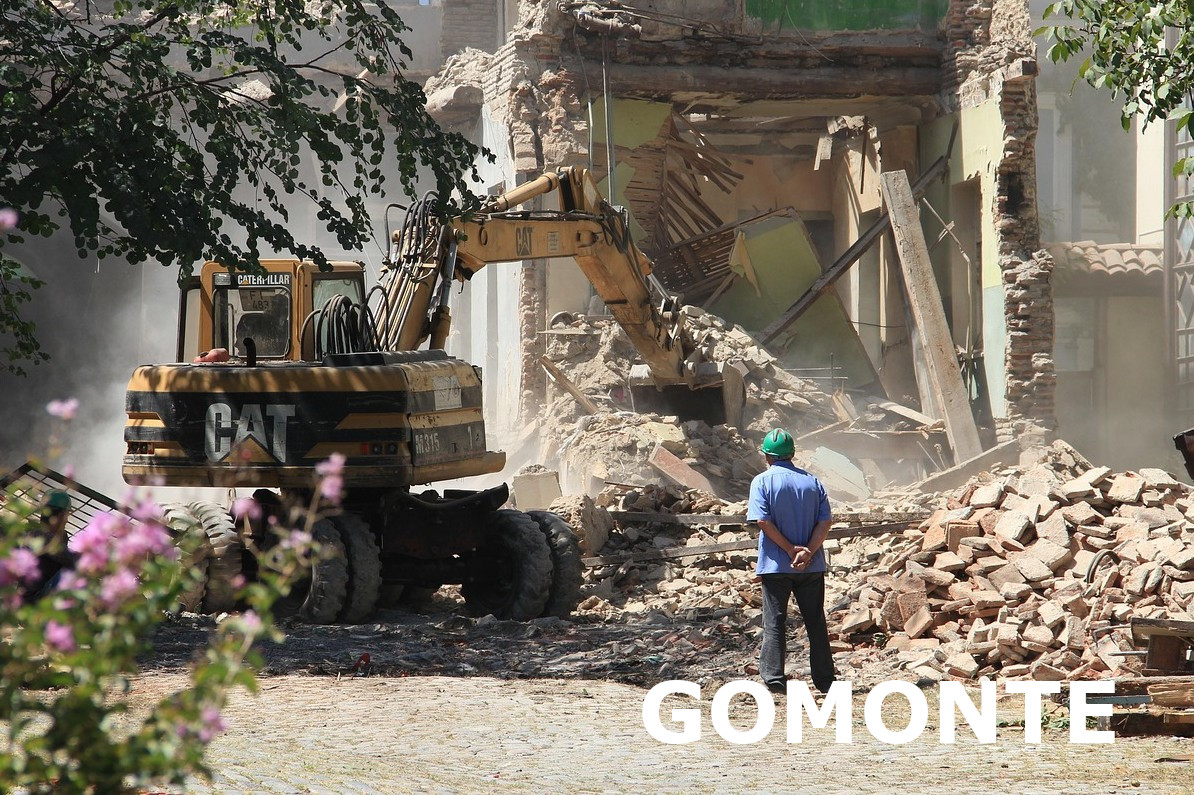
Local authorities may decide to demolish the property in situations where the illegal structure poses a direct safety threat (e.g., is located in a landslide zone or is unstable) or is located in areas where construction is strictly prohibited (sea property, protected areas of national parks).
In the event of demolition, the owner not only loses the property itself but is also obligated to pay all costs associated with the demolition work.
9. Legal Considerations for Buyers
9.1. Purchasing a Property "Pending Legalization"
If you are considering purchasing a property that is not yet legalized, but an application has been submitted for it, you must conduct a thorough investigation:
- It is necessary to verify whether an application for legalization has been submitted. The only reliable source of information is the Cadastre listing (List nepokretnosti). It must contain an official notation (zabilježba). The absence of such a notation means the process has not begun, and all liability falls on the buyer.
- It is crucial that the contract clearly stipulates the seller's obligation to complete (or pay for) the legalization process before transferring ownership, or establishes a compensation mechanism for the buyer if the process is not completed.
9.2. The Role of a Notary and a Lawyer in the Transaction
In Montenegro, a notary and a lawyer perform different, but equally important, functions when dealing with "problematic" properties:
A notary performs state oversight functions during a transaction. They are required to verify the key documents and are not authorized to certify the purchase and sale agreement if they determine that the property is illegal or that the Cadastre does not indicate that legalization has been applied for. The notary protects the state, not the buyer.
Why a lawyer is needed in this procedure:
Unlike a notary, a lawyer represents and protects exclusively the interests of the buyer. He conducts an in-depth due diligence audit: reviews urban development plans, analyzes the risks of refusal, prepares special contract clauses protecting the buyer from financial losses, and oversees the entire legalization process until full registration in the Cadastre.
Successful completion of the procedure guarantees three key benefits:
- The property is finally removed from the "informal" category, eliminating all threats of demolition and fines.
- A legalized property immediately regains its full market value and becomes a liquid asset that can be sold or used as collateral.
- The owner receives full rights to dispose of their property without restrictions.
Don't Delay Legalization! Don't let legal uncertainty reduce the value of your property. If you own an unregistered property or are planning to purchase one, the deadline of February 14, 2026, is your last chance for simplified legalization.
Book a legal consultation now. We will conduct a comprehensive assessment of your property, calculate the amount of compensation, and immediately begin the legalization process to protect your investment: +382 69 777 680 Viber/WhatsApp/Telegram
Read other articles on this topic:
Real Estate Transactions: What You Need to Know When Buying a Property gomonte.me/blog/post/54
Migration Consulting and Legal Support gomonte.me/blog/post/53